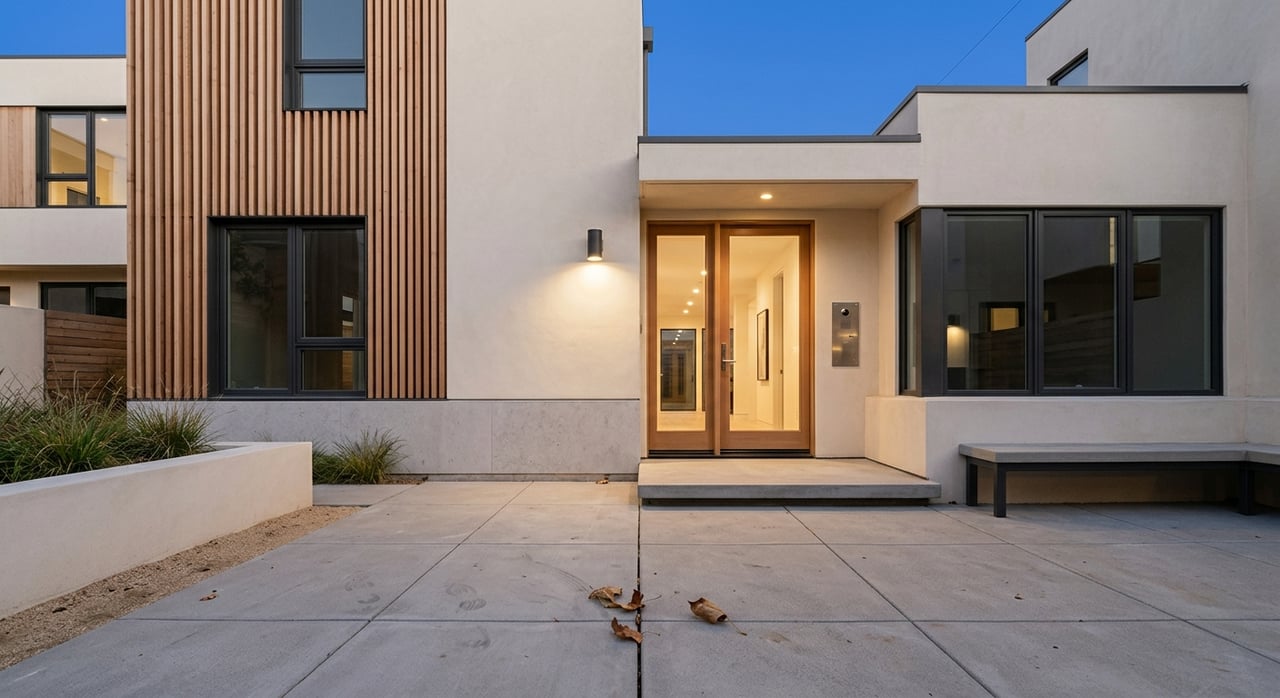
What to Know About Glendale Condos and Townhomes
June 4, 2026
June 4, 2026
Looking for a lower-maintenance way to own in Glendale without giving up convenience? You are not alone. In a city where attached housing makes up a large share of the housing stock, condos and townhomes can offer a practical path into homeownership, but the right fit depends on far more than the list price. This guide will help you understand Glendale’s condo and townhome landscape, what to review before you buy, and which questions can help you avoid surprises. Let’s dive in.
Glendale is a strong match for condo and townhome buyers because attached housing is a major part of the local market. According to the City of Glendale’s 2021-2029 Housing Element background report, 52.6% of housing units in 2020 were in buildings with five or more units, 8.6% were in two-to-four-unit buildings, and 4.4% were single-family attached homes. Detached single-family homes made up 34.4% of the housing stock.
That mix matters when you start your search. In Glendale, you are not shopping in a small side category of the market. You are shopping in a city where multifamily and attached living are part of the everyday housing picture.
It also helps explain why you will see a wide range of properties. The city notes that many condominium units were created through apartment conversions, so buyers may come across both older conversion projects and newer purpose-built attached homes.
In practical terms, Glendale buyers can expect a mix of apartment-style flats, stacked units, and some townhome-style attached homes. The exact floor plan and building style can vary a lot from one project to the next. That means your decision often comes down to daily lifestyle needs more than the label on the property.
For example, one community may offer easier exterior upkeep but less private outdoor space. Another may provide a more townhome-like layout with direct entry, but different parking or storage rules. As you compare options, it helps to focus on the features that affect your routine most.
Here are a few things to weigh as you tour properties:
A lower purchase price does not always mean a lower cost of ownership. In Glendale, monthly carrying costs deserve close attention, especially in condo and townhome communities where HOA dues are part of the equation.
Census QuickFacts shows Glendale had a median owner-occupied home value of $1,043,900, a median monthly owner cost with a mortgage of $3,606, and a median gross rent of $2,095. In a more current market snapshot, Redfin showed 85 condos for sale in Glendale at a median listing price of $692,000, while the citywide all-home median sale price was about $1.0 million.
That gap can make condos and townhomes appealing for buyers who want to enter the market at a lower price point. Still, your real monthly budget should include more than principal and interest.
When comparing homes, look at the full picture:
California’s Department of Real Estate notes that HOA reserves often help pay for major maintenance items such as roofing, painting, lighting, paving, carpet, furniture, and pool components. That is one reason communities with more amenities may carry higher dues.
If you buy in a California common-interest development, you automatically become part of the homeowners association. The HOA’s governing documents, including the bylaws and CC&Rs, define your rights and responsibilities as an owner.
For Glendale condo and townhome buyers, this is a big part of due diligence. HOA rules may address rentals, parking, pets, move-in procedures, storage, and use of common areas. These rules can have a direct impact on how the property works for your household now and later.
The good news is that California requires important disclosures before title transfers or before the purchase contract is signed. These include the governing documents and a written statement covering current regular and special assessments, unpaid assessments, and unpaid fines or penalties.
One of the clearest ways to understand a community’s financial health is to review its budget and reserve information. California law requires annual budget reporting and an annual policy statement, and associations must complete a reserve-study visual inspection at least once every three years under the statutory threshold.
For you as a buyer, these documents can help answer some very practical questions. Are the dues keeping up with maintenance needs? Is the HOA planning major work? Could dues rise in the near future? Is there a risk of a special assessment?
This is especially important in communities where shared systems and amenities can be expensive to maintain. A well-run HOA is not just about the appearance of the building. It also affects your monthly costs and your future resale experience.
Because Glendale has many condo units created from apartment conversions, buyers should take an especially careful look at older converted properties. California’s Department of Real Estate warns that conversion projects can have higher maintenance and repair needs. Infrastructure, mechanical, electrical, and plumbing systems may need major rehabilitation or updates.
That does not mean a conversion is automatically a bad choice. It simply means you should review the HOA documents, building condition, repair history, and reserve planning with care. In some projects, assessment increases may become more likely after a developer’s obligations end.
If you are comparing an older conversion with a newer purpose-built townhome or condo, this is one of the biggest points of contrast. The floor plan may be attractive, but the long-term financial picture matters just as much.
Some buyers plan to live in the home for years. Others want the option to rent it out later if life changes. If that flexibility matters to you, make rental rules part of your early research, not an afterthought.
California Civil Code Section 4741 generally limits HOA rules that ban or unreasonably restrict leasing of a separate interest, and it bars rental caps below 25% of the separate interests. Even so, project-specific rules still need to be reviewed carefully.
In other words, state law provides some guardrails, but every community can still have its own policies and procedures. Before you make an offer, confirm whether the building’s rules fit your long-term plans.
California law also places limits on some HOA assessment increases. Civil Code Section 5605 limits how much a regular assessment can be increased without member approval and caps special assessments in the aggregate above 5% of budgeted gross expenses without approval.
That can provide some structure, but it should not lead buyers to assume every project is financially trouble-free. Deferred maintenance, underfunded reserves, or major repair needs can still affect future costs. The best approach is to review the numbers and ask direct questions before you commit.
Location matters in every home search, but it can matter even more with condos and townhomes because projects can feel very different depending on transit access, freeway proximity, and neighborhood layout. Glendale offers strong regional connections across the Los Angeles area.
The city identifies the Larry Zarian Transportation Center as a central hub served by Amtrak, Metrolink, Greyhound, Metro, and Glendale Beeline. The city states that the station serves 10 Pacific Surfliner trains daily and 54 Metrolink trains on weekdays. Glendale Beeline operates 12 fixed routes serving Glendale, La Cañada Flintridge, La Crescenta, and Montrose.
Road access is also a major advantage. City materials identify Glendale’s connections to SR-2, I-5, SR-134, and I-210. Census QuickFacts lists the city’s mean travel time to work at 27.1 minutes.
As you narrow your search, think about how the location supports your real routine:
A strong condo or townhome purchase often comes down to asking the right questions early. The answers can help you compare projects on more than surface appeal.
Start with these:
These questions can quickly separate a home that looks good on paper from one that truly fits your budget and goals.
The best Glendale condo or townhome for you is not always the one with the newest finishes or the lowest list price. It is the one that works as a whole. That includes the home itself, the HOA, the monthly payment, the location, and your longer-term plans.
Because Glendale is such a multifamily-heavy market, buyers have real options. That is a strength. It also means careful comparison matters, especially when you are balancing price, building type, commute, and ownership costs.
If you want guidance sorting through Glendale condos, townhomes, HOA details, and neighborhood fit, Petro Real Estate Group - Andrew & Stacy can help you evaluate the full picture with a thoughtful, local approach.
Stay up to date on the latest real estate trends.
We pride ourselves in providing personalized solutions that bring our clients closer to their dream properties and enhance their long-term wealth. Contact us today to find out how we can be of assistance to you!