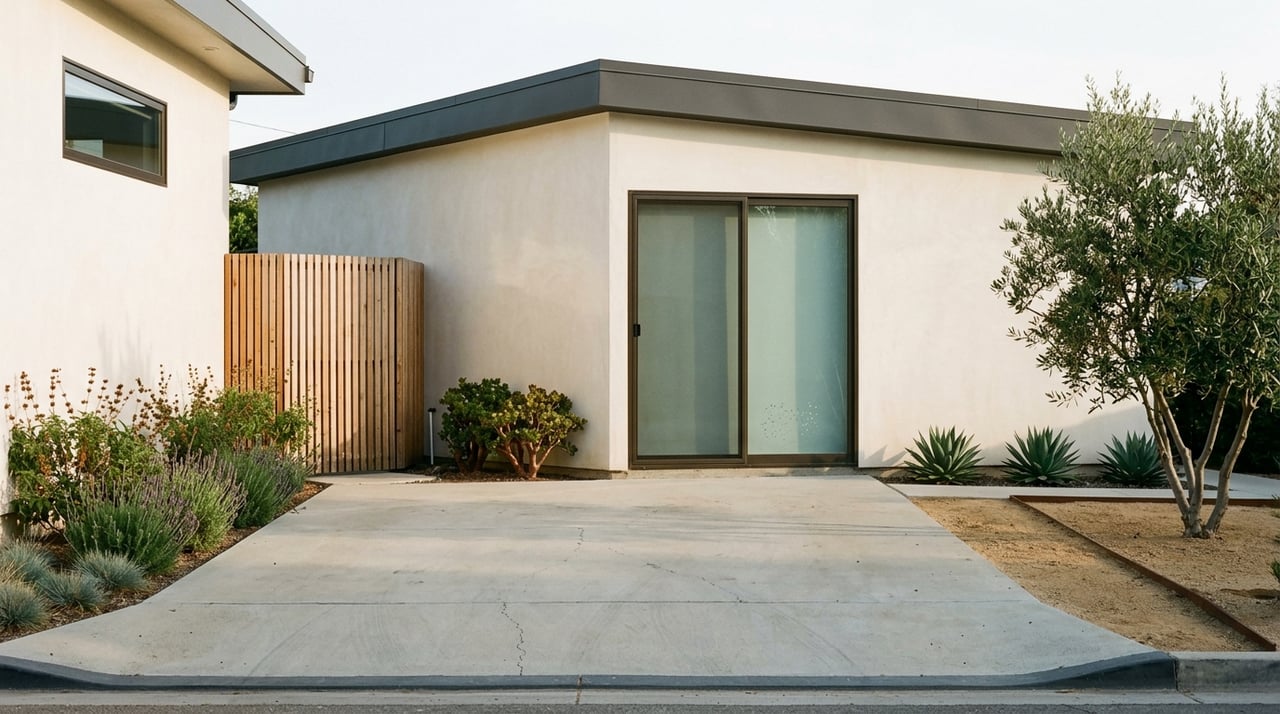
Is Sunland CA Real Estate Investing Right for You?
May 7, 2026
May 7, 2026
If you have been priced out of Los Angeles foothill markets but still want a path into residential real estate investing, Sunland may deserve a closer look. For many small investors, the challenge is finding a neighborhood where the numbers can still work without jumping straight into ultra-premium pricing. In this guide, you’ll get a practical look at what makes Sunland appealing, where the risks show up, and what to review before you buy. Let’s dive in.
Sunland looks like a lower-basis entry point compared with several nearby foothill communities. Recent market snapshots show Sunland proper at a $995,000 median sale price last month on only five sales, while the broader Sunland-Tujunga market showed an $857,000 median sale price on Redfin and a $0.90 million median asking price on Realtor.com. By comparison, nearby asking prices were materially higher in Glendale, Burbank, La Crescenta-Montrose, and La Cañada Flintridge.
That pricing gap matters if you are trying to enter the market with a smaller budget or want room for improvements. It can create opportunities for buyers who are focused on long-term rental income, owner-occupant strategies with future income potential, or value-add projects. At the same time, Sunland is not a bargain market where due diligence matters less. You still need to underwrite carefully.
Sunland is active, not stagnant. Redfin shows 57 days on market for the broader Sunland-Tujunga area, while Realtor.com reports 43 days on market and labels it a warm market. That suggests buyers are still engaged even if the area is not trading at the premium levels seen in nearby foothill enclaves.
There is also evidence that buyers are staying close to asking price. Redfin reports a 100.3% sale-to-list ratio and a 41.5-day market pace for Sunland-Tujunga. For you, that means a good deal may not sit around for long, especially if it has usable lot space, a flexible layout, or ADU potential.
The housing mix in Sunland-Tujunga appears to be more house-heavy than apartment-heavy. Current rental listings include detached homes with roughly 2 to 4 bedrooms and about 773 to 1,900 square feet. Recent sold-home examples in Sunland and Sunland-Tujunga also skew toward detached single-family homes.
That matters because your investment approach in Sunland may look different from a denser rental market. Instead of chasing larger multifamily inventory, you are more likely to evaluate a single-family rental, a home with room for an ADU or JADU, an owner-occupant purchase with future rental potential, or a value-add resale tied to condition and permit status.
Here are the most practical frameworks many small investors should research in this area:
Because the local inventory leans toward detached homes, the details of the parcel matter. Lot configuration, existing improvements, parking, and permit history can all change the investment story.
Rental demand in Sunland-Tujunga appears active, even if the market is not huge. Realtor.com shows 84 rentals currently listed, a median rent of about $3,200 per month, a year-over-year decline in rental count, and a rise in median rent. That combination can point to relatively tight supply compared with prior periods.
The rent level also places Sunland-Tujunga in an interesting position within the foothill market. It sits above Glendale and Burbank in the reported median rent data, but below La Crescenta-Montrose and far below La Cañada Flintridge. For a small investor, that can make Sunland feel more accessible on the purchase side while still offering meaningful rent potential.
Headline rent numbers are useful, but they are not enough to make a buy decision. In Sunland, rental inventory includes house-style properties, and those can vary widely by bedroom count, condition, yard utility, and whether an ADU is part of the setup. A remodeled 3-bedroom house and an older 2-bedroom home may sit in the same neighborhood but perform very differently.
That is why small investors should rely on true comparable rents for similar homes, not apartment comps or broad neighborhood medians alone. Your underwriting should reflect the exact property type you are buying.
For many buyers, the biggest reason to consider Sunland is ADU potential. Los Angeles defines an ADU as an attached or detached independent dwelling on the same lot as a primary residence. A JADU is defined as no more than 500 square feet and entirely within a single-family residence.
If you are looking for extra income or more flexible living arrangements, that matters. A property that can support a legal ADU or JADU may offer additional options over time. In a house-heavy neighborhood, that can be one of the clearest ways to create value.
According to city guidance, several details can affect your budget and feasibility:
These rules can improve feasibility on some lots, but not every parcel will be a fit. Before you get attached to a property’s upside, confirm what is realistic for that specific site.
If you plan to rent out a property in Sunland, Los Angeles rental rules are central to your analysis. The Los Angeles Housing Department states that units in the City of Los Angeles are generally subject to the Rent Stabilization Ordinance if the property was built on or before October 1, 1978. The same city guidance notes that ADUs and JADUs are among the covered unit types listed on its RSO page.
This matters because rent growth may not be fully flexible. LAHD also states that covered units must be registered annually, and the current annual allowable RSO increase is 3% for July 1, 2025 through June 30, 2026. If a property may fall under RSO, that should be part of your budget from day one.
A lower purchase price does not always mean easier cash flow. If your property is RSO-covered, you may need to plan around annual registration and limits on rent increases. That does not make a deal bad, but it does mean your pro forma needs to reflect local rules rather than best-case assumptions.
In Sunland, value-add potential often comes down to legal square footage and permitted units. If a property includes an ADU or JADU, LAHD says the Los Angeles Housing Code applies to residential rental properties with two or more units. If a home contains an unpermitted unit, Los Angeles City Planning says some qualifying units may be legalized through the Unpermitted Dwelling Units program using a six-step process involving City Planning, LADBS, and LAHD.
For you, that means permit history should never be an afterthought. A home that appears to offer bonus space or extra income may not perform the way you expect if that space is not legal or cannot be legalized. The best investment decisions in Sunland usually come from verifying facts before you commit.
Sunland’s foothill setting is part of its appeal, but it also creates extra diligence items. Redfin with First Street data rates Sunland-Tujunga as having severe wildfire risk, moderate flood risk, and major heat risk over the next 30 years. Those risks can affect insurance costs, maintenance planning, and your long-term ownership budget.
The Los Angeles Fire Department’s brush-clearance guidance also notes that brush clearing itself can start fires. It recommends careful equipment use and avoiding brush work on Red Flag days. For a small investor, this is a reminder that exterior upkeep is not just cosmetic. It can be part of your operating risk management.
Before you buy, make sure you understand:
These details can change the real cost of ownership more than a headline sale price suggests.
If you are considering Sunland as a small investor, focus on a short list of questions early in the process. These items can help you avoid surprises and compare opportunities more accurately.
Sunland can make sense if you want a foothill-area entry point with more approachable pricing than several nearby communities. Its appeal often comes from the chance to buy a detached home, improve it, and possibly unlock more value through layout changes or ADU potential. That can be especially relevant if you are looking for a first rental, a house hack, or a flexible long-term hold.
The tradeoff is that you cannot rely on broad averages alone. Rent stabilization, permit status, ADU rules, and wildfire-related ownership costs all deserve close review. In other words, Sunland may offer opportunity, but the best results usually go to buyers who stay disciplined and local in their analysis.
If you want help evaluating Sunland properties through a practical, property-by-property lens, Petro Real Estate Group - Andrew & Stacy can help you compare options, assess ADU potential, and navigate the local market with a tailored strategy.
Stay up to date on the latest real estate trends.
We pride ourselves in providing personalized solutions that bring our clients closer to their dream properties and enhance their long-term wealth. Contact us today to find out how we can be of assistance to you!