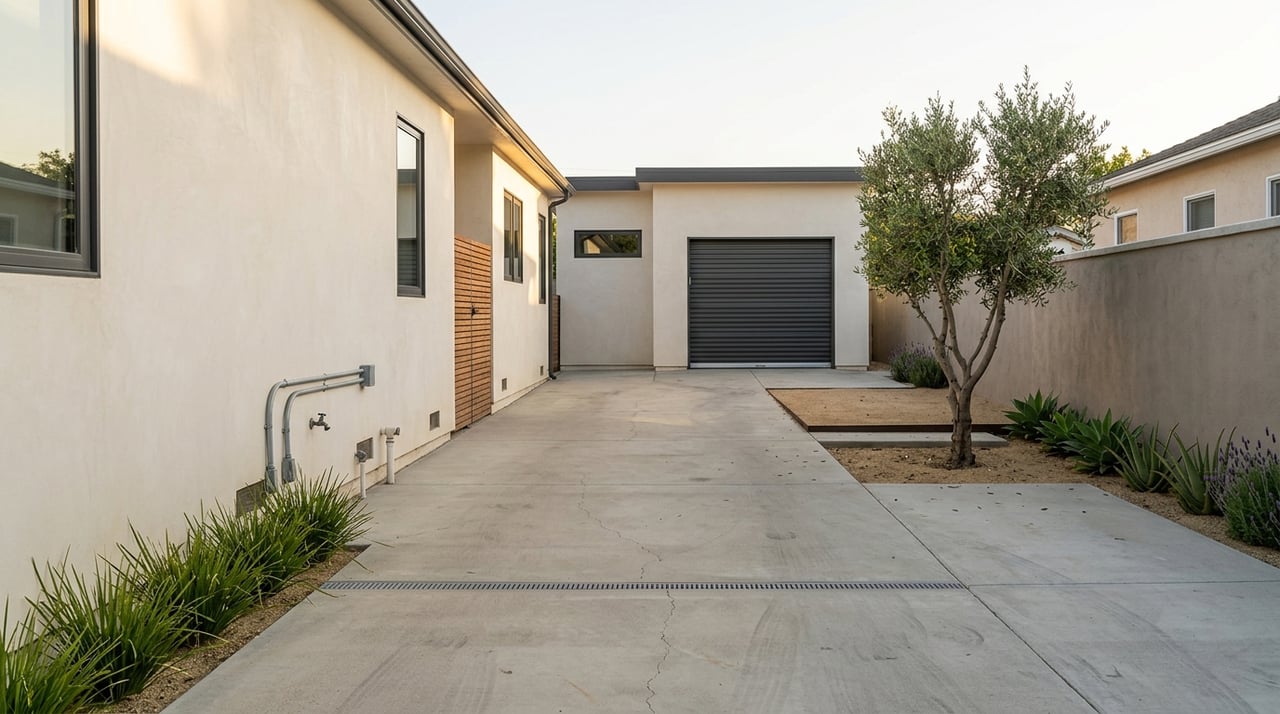
How to Evaluate ADU Potential in La Crescenta Homes
May 14, 2026
May 14, 2026
If you are eyeing a home in La Crescenta for extra living space, rental potential, or long-term flexibility, ADU potential may be one of the most important details to evaluate before you buy. In this foothill market, many properties are older single-family homes, which can create real opportunities for additions, garage conversions, or backyard units, but the rules are not always as simple as the mailing address suggests. This guide will help you understand what matters most in La Crescenta, what can affect feasibility, and how to spot promising properties with more confidence. Let’s dive in.
La Crescenta-Montrose is an unincorporated Los Angeles County community, and that matters because Los Angeles County rules govern ADUs here. The county also warns that mailing addresses can point to an adjacent city, so you cannot assume a Glendale-style mailing address means Glendale rules apply. Before you make plans, you need to confirm the parcel jurisdiction.
The local housing mix also helps explain why ADUs are such a relevant topic in this area. According to Los Angeles County Planning, 82 percent of land in La Crescenta is in single-family residential use, 76.5 percent of housing units are single-family homes, and 83 percent of the housing stock was built before 1979. In practical terms, that often means buyers are looking at properties where an ADU could come from a rear-yard build, an addition, or conversion of an existing garage or accessory structure.
Los Angeles County allows ADUs on properties zoned for single-family, multifamily, or mixed use. The exact number and type depend on the lot and the existing housing.
On a single-family lot, county rules allow:
A standard ADU includes full kitchen and bathroom facilities. The county guidance sets the maximum size for a standard ADU at 1,200 square feet.
A JADU, or junior accessory dwelling unit, is smaller and more limited. County guidance caps a JADU at 500 square feet, and JADUs require owner occupancy.
On multifamily properties, the rules work differently. Attached ADUs can be created from non-livable space such as storage rooms, boiler rooms, passageways, attics, basements, or garages, and detached ADUs may also be possible.
County guidance says attached ADUs may equal up to 25 percent of the existing principal units. Detached ADUs can go up to 8 per lot, as long as the detached ADUs do not exceed the number of principal units on the lot. JADUs are not allowed on multifamily lots.
A home may look ADU-friendly at first glance, but parcel-level details can change the picture quickly. In La Crescenta, the most important questions often involve setbacks, fire-zone issues, access, and utilities.
For new ADUs, the county ordinance generally requires a 4-foot setback from rear, interior side, and corner side lot lines. If the ADU is entirely within an existing legal structure, or if you are converting an existing accessory structure without expanding its footprint, no setback is required.
There is also an important flexibility point for smaller units. The ordinance allows an ADU of 800 square feet or less to encroach into a front-yard setback if there is no other ground-level location on the property.
Many buyers assume parking will block an ADU plan, but that is not always true in unincorporated Los Angeles County. Outside a Very High Fire Hazard Severity Zone, no parking is required for an ADU.
Inside a Very High Fire Hazard Severity Zone, the county generally requires one uncovered parking space unless an exemption applies. That space can be on a driveway or in tandem. If a garage, carport, covered parking area, or even an uncovered parking space is removed or made unusable to create the ADU, no replacement parking is required.
In foothill areas like La Crescenta, fire-zone review can be one of the biggest practical hurdles. Because the community borders the San Gabriel Mountains and Angeles National Forest, buyers should screen properties early for fire-zone and access constraints.
Los Angeles County Fire says fuel-modification plan review applies to new structures and some additions in Fire Hazard Severity Zones. County wildfire guidance also points owners to Chapter 7A and other wildfire urban interface fire-resistive construction standards.
The county summary adds another important point for ADUs in a Very High Fire Hazard Severity Zone. In general, an ADU is allowed only if the lot has two distinct, non-overlapping means of access to a highway, each 24 feet wide and built to Public Works standards, or if the lot fronts directly on a highway with direct vehicle entry. The county's state-exempt ADU and JADU types are not subject to those local access standards.
Even when zoning looks favorable, utility details can shape the outcome. County Survey and Mapping assigns legal addresses in unincorporated areas, including for ADUs that need a separate utility meter and mail service.
County guidance also says you should consult Southern California Edison before applying if overhead power lines or related access easements are adjacent to the property. This is one of those details that can be easy to miss during a home search, but it can affect design and placement.
This is one of the most overlooked issues for La Crescenta buyers. Because La Crescenta-Montrose is unincorporated, county rules apply, but mailing addresses in the area can be misleading.
That means the first step is not sketching floor plans or assuming a detached garage can be converted. The first step is confirming the parcel is actually in unincorporated Los Angeles County and reviewing the zoning tied to that parcel.
The county outlines a fairly clear approval path for ADUs in unincorporated areas. First, confirm the parcel jurisdiction and zoning. Then you can optionally speak with Regional Planning, prepare complete plans, and submit a Regional Planning Base Application through EPIC-LA.
According to the county step-by-step guide, a complete ADU application should be approved or denied within 60 days after payment. That timeline can be extended if the applicant requests it or if the ADU is filed along with a new primary residence.
After planning approval, the application moves through agency referrals and then building permit review. Los Angeles County Public Works says permits are not issued until all required approvals are complete and an address has been assigned.
The county also offers Standard ADU Plans that may help speed review, although the county catalog notes those plans are being updated for building code changes effective January 1, 2026. If you are relying on older online summaries, it is smart to double-check them against current county guidance.
A JADU can sound attractive because it is smaller and may fit within the main house more easily. But the rules are stricter.
For JADUs, Los Angeles County requires a recorded covenant, separate exterior access, and principal-residence occupancy by at least one legal owner of the lot. By contrast, county guidance says ADUs and JADUs are rental units for at least 30 consecutive days and are not independently saleable, but a standard ADU usually gives you more flexibility than a JADU when you are evaluating long-term use.
If you are comparing homes for multigenerational living, guest use, or rental planning, this distinction matters. Two properties with similar square footage may offer very different options depending on whether the best fit is a standard ADU or a JADU.
When you are touring homes, try to look beyond the obvious garage or backyard. In La Crescenta, a promising ADU property often has a combination of features that support a smoother approval path.
For buyers, ADU potential can change how you value a property. A home with realistic conversion or build options may offer more flexibility for extended household needs, future rental use, or a work-from-home setup, depending on your goals.
For sellers, ADU potential can be an important marketing angle when it is presented accurately. In a market with many older single-family homes, buyers often respond well to properties that offer clear value-add opportunities, especially when parcel details and county rules have been reviewed carefully.
This is where local knowledge makes a difference. In La Crescenta, the conversation is rarely just, "Can this lot have an ADU?" More often, the better question is, "What kind of ADU is realistic here, and what constraints should you understand before you commit?"
If you are buying or selling in La Crescenta and want help evaluating ADU potential with a local, property-specific lens, connect with Petro Real Estate Group - Andrew & Stacy. Their boutique, relationship-first approach can help you identify value, ask the right questions early, and move forward with more clarity.
Stay up to date on the latest real estate trends.
We pride ourselves in providing personalized solutions that bring our clients closer to their dream properties and enhance their long-term wealth. Contact us today to find out how we can be of assistance to you!