What Sunland CA Home Prices Actually Buy
September 3, 2026
September 3, 2026
Two buyers, both working with roughly $900,000, both typed "Sunland" into a portal search this month. One got back a three-bedroom single story on a standard lot near Foothill Boulevard. The other got back a vacant hillside parcel with a slope analysis and a note about buildable square footage. Same neighborhood name, same price range, two entirely different transactions. Neither buyer was wrong about what they saw. They were just looking at different markets that happen to share a mailing address.
That is the thing to understand before you trust any single median price quoted for Sunland right now. The number is real. It is just measuring three places at once.
Ask a longtime resident where Sunland actually is and you will get an answer that includes at least three distinct pockets: the flats below Foothill Boulevard, where lots run in the standard range you would expect from any mid-century Valley subdivision, the hillside parcels that shade into Tujunga and get sold and appraised more like raw land than finished homes, and Shadow Hills, a small enclave that sits inside the broader Sunland community but operates under its own zoning rules built around horse ownership rather than density.
These are not marketing distinctions. They show up in how the land is zoned, how it is comped, and what a buyer's budget actually converts into once escrow closes.
Here is what that looks like in practice:
| Sub-area | What you're typically buying | Lot character | Zoning signal |
|---|---|---|---|
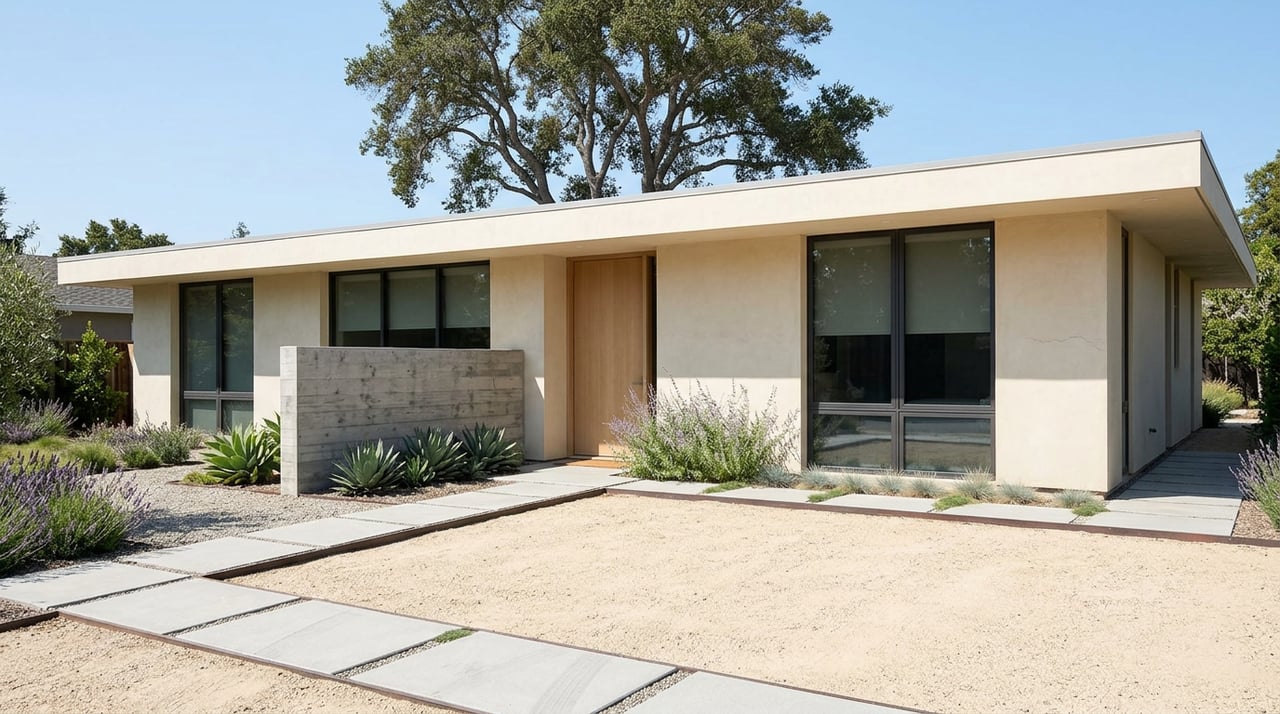
| Sunland flats (near Foothill Blvd) | A finished single-family home | Standard suburban lot | Conventional residential |
| Hillside / Tujunga-adjacent | Often a fixer or vacant view parcel | Slope-dependent, buildable area varies by grade | Hillside overlay, buyer verifies developable footprint |
| Shadow Hills | Land or a home with substantial acreage | Tens of thousands of square feet up to several acres | Equestrian ("K") zoning built around horsekeeping |
A buyer comparing "Sunland" listings without knowing which of these three they are actually in is comparing apples to a fairly different fruit.
If you have already priced Sunland on more than one site, you have probably noticed the numbers do not line up. That is not a glitch. It is the direct consequence of a small, heterogeneous market getting sliced differently by every source that reports on it.
Redfin's Sunland-only tracker, as of July 2026, puts the median sale price at $789,000, down slightly, less than a quarter of a percent, from a year earlier. Widen the boundary to the combined Sunland-Tujunga area and Redfin's own tracked home-value growth for May 2026 shows $874,706, up half a percent year over year. Same company, same general footprint, an $85,000 gap in absolute price depending on how wide the boundary is drawn.
Zillow's own home value index does something similar to itself. One version of its Sunland page shows the typical home value at $812,783, down 3.1% over the past year. Another shows a nearly identical figure, $814,622, up 17.2% over the same stretch. Both were live on Zillow's site the same week in late August 2026. Movoto's August 2026 snapshot lists Sunland's median asking price at $999,000, with price per square foot down about 7% year over year, while its combined Sunland-Tujunga page reported a lower sold median of $895,000 as recently as June 2026.
None of these sources is lying. They are working from small, inconsistent samples in a market where monthly sale counts run in the dozens, not the hundreds. Redfin's own listing pages for the combined area have shown as few as 18 homes sold in a single tracked month. When your sample size is that thin and your housing stock ranges from a quarter-acre starter home to a multi-acre horse property, a single high-end land sale or a cluster of hillside fixers can swing the median hard enough to flip the year-over-year arrow from negative to positive. That is the mechanism. It is not that the market is unknowable. It is that a monthly median calculated across three structurally different sub-markets is going to be noisy no matter who is running the math.
Shadow Hills is the clearest example of why bundling hurts the data. It sits inside the larger Sunland community but is governed by Los Angeles Municipal Code Equinekeeping ("K") District rules, which permit horsekeeping on lots of at least five acres, along with dedicated streets to support stables and riding arenas. The area's community plan, adopted by the Los Angeles City Council in 1997, designates the neighborhood for minimum to very-low residential density, generally 0 to 3.5 dwelling units per net acre, specifically to preserve that large-lot, rural character.
The practical effect: Shadow Hills has essentially no multifamily housing stock, and land there gets marketed and priced more like acreage than like a standard residential lot. Recent listings in and around the equestrian district have included a one-acre buildable parcel, a 7.5-acre lot near million-dollar homes, and a 30-acre hillside parcel in nearby La Tuna Canyon, several of them positioned for a custom estate or equestrian facility rather than a conventional build. When land like that gets folded into a "Sunland" or "Sunland-Tujunga" comp set alongside a 6,000-square-foot flatland lot, the resulting median tells you very little about what either buyer would actually pay for either property.
This matters most for two kinds of buyers. A move-up family shopping strictly in the flats does not need to worry about the equestrian overlay skewing their comps, but they should know to ask their agent to filter it out before trusting any headline number. An investor or multi-generational buyer eyeing a larger parcel for an ADU or a family compound needs the opposite: they need someone who can pull the Shadow Hills and hillside comps specifically, because the flats data will understate what that kind of land actually trades for.
If you are cross-shopping Sunland against La Crescenta, La Cañada Flintridge, Burbank, or Glendale, the lesson is not that Sunland is cheap or expensive relative to those areas. It is that "Sunland" as a search term is doing three jobs at once, and the median price you see reflects whichever of those jobs happened to dominate the sales mix that particular month. A buyer who wants a straightforward single-family home in a walkable flats setting is shopping a different price tier and a different pool of comps than a buyer weighing a hillside view lot or a Shadow Hills acreage parcel, even though a portal search will hand them the same neighborhood label and the same blended median.
The fix is not more data. It is better filtering, and that is where local knowledge earns its keep: knowing which street is the informal dividing line between the flats and the hillside, knowing which listings are really Shadow Hills land dressed up as Sunland homes, and knowing which comps to throw out before quoting a client a number.
Is Shadow Hills technically part of Sunland? Yes. It sits within the broader Sunland community but functions under its own equestrian zoning, which is why its land and lot sizes look so different from the rest of the area.
Does the large-lot zoning in Shadow Hills mean more ADU potential? Larger lots can support more building options, but equestrian zoning, slope, and utility access all affect what is actually buildable on a given parcel. That is a site-specific question, not a neighborhood-wide answer, and it is worth verifying before you make an offer.
Is now a good time to buy in Sunland? It depends which Sunland you mean. The flats, the hillside, and Shadow Hills are moving on different timelines with different buyer pools, which is exactly why a single blended median from any one portal should not be the deciding factor.
If you are trying to figure out which version of Sunland actually fits your budget and your plans, that is a conversation worth having before you fall in love with a listing photo. Petro Real Estate Group works these micro-markets block by block, from the flats to the hillside to the equestrian pockets, and can help you read a comp set that actually applies to the property you're considering. Schedule a Consultation to start sorting out which Sunland you're really shopping.
Stay up to date on the latest real estate trends.
We pride ourselves in providing personalized solutions that bring our clients closer to their dream properties and enhance their long-term wealth. Contact us today to find out how we can be of assistance to you!